
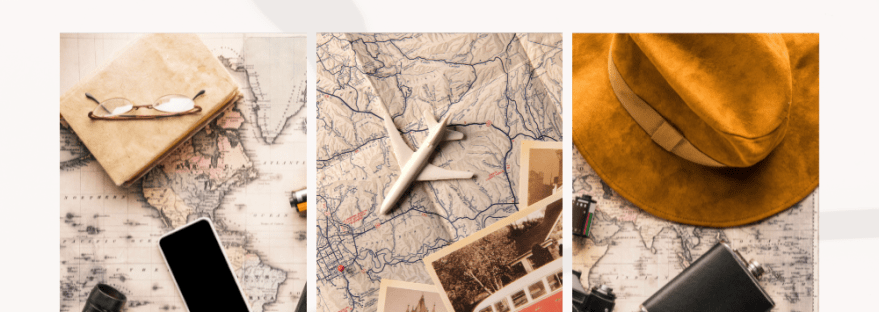

Summer is in full swing, and for many of us, it is time to take a break from our busy lives and travel!
Unfortunately, while traveling is exciting for many of us, it can ignite anxiety symptoms for others.
I know this to be true from personal experience. My anxiety used to ramp up during travel to the point that I couldn’t eat before or during the trip. My brain just stirred in circles over the fear of forgetting to pack something or not having my itinerary booked correctly.
Over several years I have developed five tips that help me avoid spikes in my anxiety while traveling. Whether in the airport, on the flight, or at my hotel, these are the tips I swear by!
- Visualization: When I am on my flight, I try to sit back and visualize how I will feel fifteen minutes after I have arrived at my destination and am ready to enjoy the trip. While doing this visualization, I ask myself, “what would each of my five senses be experiencing during this moment?” For example, I recently took a trip to Hawaii, and while on the plane, I imagined what it would feel like when I first got to the sandy beaches of Waikiki. I visualized the feeling of the sand between my toes as I took a deep breath of the salty ocean air and put my beach towel down. I envisioned myself sitting down and soaking in that beautiful, deep blue ocean color as the waves quietly crashed to the shore while drinking my favorite iced coffee. By activating my five senses during the visualization, I can stay present and avoid the stress associated with travel.
- Make a DIY calming jar: This is one of my mainstays for anxiety. With just the two ingredients of baby oil and glitter, you can create a versatile calming jar that can be taken anywhere! I like to use the jar by watching the glitter slowly fall while I focus on my breath. Try it out; you might find it soothing. Unsure of how to make one, watch my how-to video here!
- Read a book: In my experience, reading books are more effective than watching a movie to calm your anxiety while passing the time. This is because you are forced to use your imagination and thus activate your prefrontal cortex while reading a book. When your prefrontal cortex is activated, it has a diminished capacity to focus on thoughts of anxiousness. Contrarily, when you watch a movie, your brain can drift off; thus, your prefrontal cortex is shut off, and your anxiety amplifies. If you are not someone who enjoys reading, consider doing something active like journaling or drawing. Maybe even jot down a list of all the things you are hoping to do while you are on vacation.
- Magnesium: Taking magnesium can help lower muscle tension and thus lower those panicked feelings of anxiety. It’s a safe and easy over-the-counter solution that I cannot go without!
- Breathing exercises: If you follow any of my social media platforms, you have probably heard me talking about triangle breathing. It’s an easy three-step process that you can imagine in the shape of a triangle to help naturally reduce anxiety symptoms. First, inhale for four seconds, then hold your breath for four seconds, and finally, exhale for four seconds. By changing your breathing pattern, you can naturally regulate your heart rate and thus reduce the feelings of anxiety.
Hopefully, these tips can help you feel empowered on your next trip from home.
Struggling with anxiety more often than just flying?
Stay tuned to this blog for more mental health tips!


 Arctic Horizons Counseling, LLC